
Exploring the German Education System: A Guest Lecture at
Sanata Dharma University
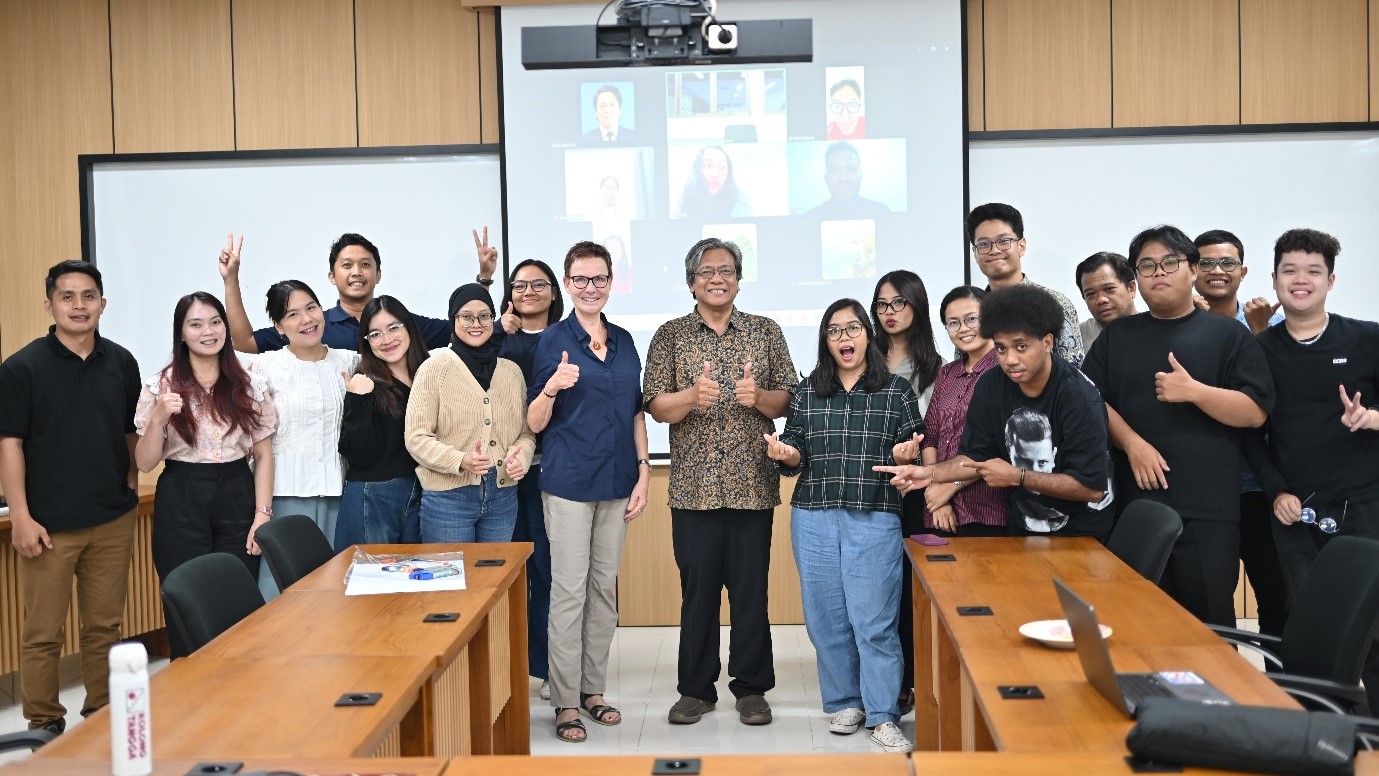
On Thursday, October 29, 2026, the “Education Research Trends” course within the Master’s Program in English Language Education at the Faculty of Teacher Training and Education, Sanata Dharma University, offered a unique learning experience by featuring Ms. Kordula Schulze, an academic from the University of Münster, Germany as a guest lecturer. This session provided students with the opportunity to gain firsthand insight into the German education system and compare it with the system in Indonesia. In the opening, F.X. Ouda Teda Ena, Ed.D., as the lecturer of the class, underlined the importance of understanding different education systems from different countries.
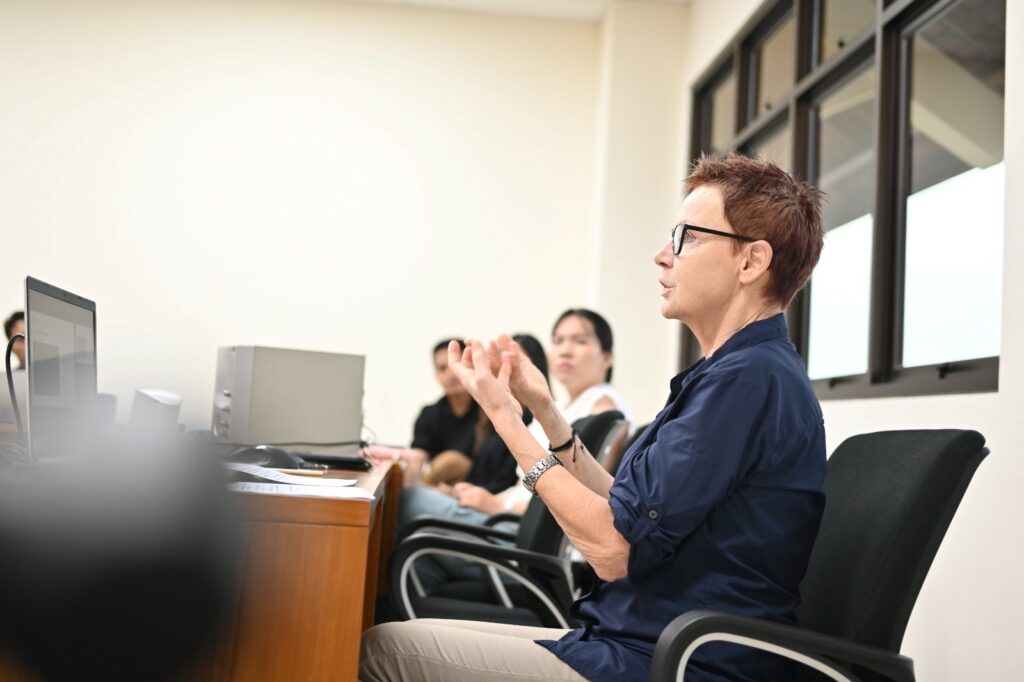
Ms. Kordula Schulze possesses extensive experience in the field of education. Her professional background includes work as a schoolteacher and teacher educator, as well as in school quality analysis. She began working at the University of Münster in 2006. Since 2017, she has also been actively involved in developing international teacher training collaborations in Indonesia. Her participation in this course is part of a broader effort to strengthen academic cooperation between USD and the University of Münster, recently marked by the signing of a Memorandum of Agreement (MoA). This development builds on the DEEP project, which focuses on democracy, environmental education, and discursive participation in German-Indonesian teacher education.
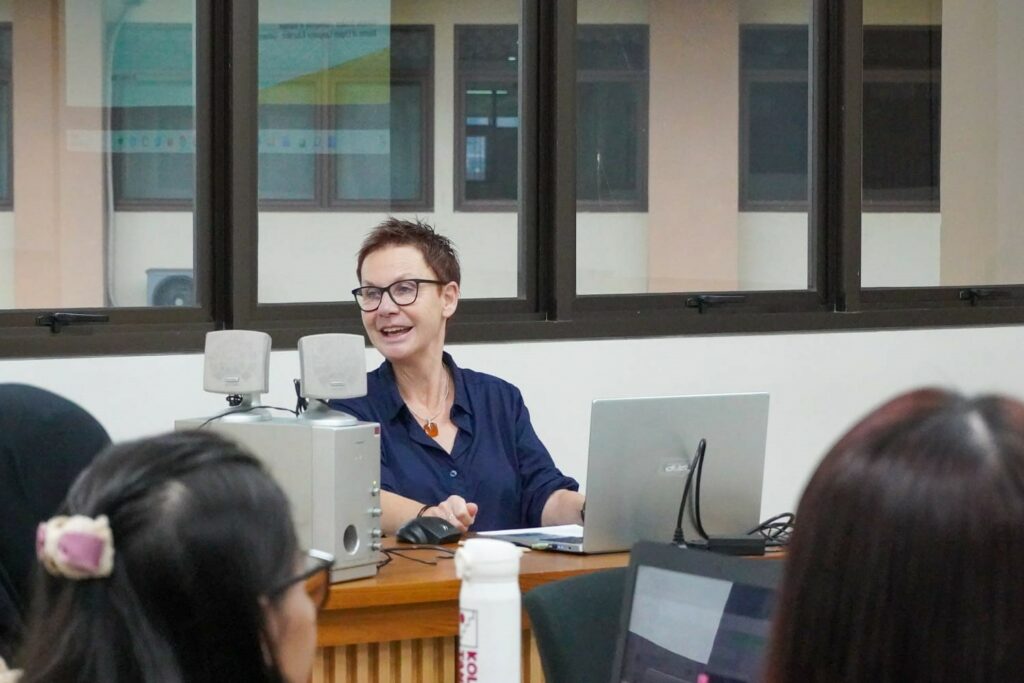
During the lecture, Ms. Kordula Schulze guided students through the fundamental differences between the Indonesian and German education systems, particularly regarding educational governance and school administration.
While Indonesia employs an education system that tends to be centralized through national policies, Germany grants broader authority to its 16 federal states (Länder) to manage educational policies, including curricula and school operations.
Students are also introduced to the educational structure in Germany, which offers various pathways tailored to individual abilities and interests. After completing primary education (Grundschule), students can proceed to different types of secondary schools—such as the Gymnasium, which prepares students for higher education, the Gesamtschule, or various vocational education tracks. A notable feature discussed is the “dual system” of vocational education, which combines theoretical classroom learning with hands-on practical experience in the workplace.
Beyond the educational structure, the discussion also covers school autonomy in Germany. Within the regulations of the federal states and in coordination with school authorities, schools have considerable flexibility to shape teaching and school life. For example, they may organise lessons in 45-, 60-, or 90-minute periods, develop foreign language offerings, including Dutch or Chinese, and design extracurricular activities. Depending on the federal state and school type, they can also influence the organisation of open or compulsory all-day programmes and some staffing decisions. Short films about schools recognised by the German School Award provided further examples of different educational approaches.
Through this course, students from the Faculty of Teacher Training and Education (FKIP) at USD have the opportunity to broaden their perspectives on educational practices at an international level. The presence of an academic from Germany not only enriches the course content but also creates a space for the exchange of knowledge and experience, equipping students to better understand the challenges and developments in education across various countries.
(IO)